
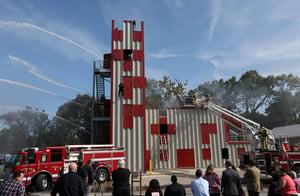
Departments invest in burn buildings to create consistent training environments. That investment only goes so far on its own.
Crews learn the layout quickly. After that, each evolution starts to feel a little more familiar. The structure stays the same, and the challenge starts to level off.Firefighting training props and accessories give instructors more ways to shape how the building is used without changing the structure itself. A single building can support a wider range of scenarios and keep training from becoming predictable.
What Makes a Firefighting Training Prop Worth Adding?
Not every accessory adds noticeable value to a training program. Some get used consistently, while others fade out after a few evolutions. The difference usually comes down to whether the prop changes how you deliver training.
A worthwhile addition gives instructors more control over the environment. It allows them to adjust conditions without rebuilding the entire setup. Crews are forced to respond to change instead of relying on familiarity.
The props that stay in rotation tend to share a few traits:
- Creates conditions the structure alone can’t
- Durability that supports repeated use without constant upkeep
- Flexibility across multiple training scenarios
- Alignment with how the department trains day to day
- Reflect the real environments you’ll face in your community
These are the kinds of additions that keep a burn building from feeling static and open the door to more varied training scenarios.
Firefighting Training Props That Expand What Your Burn Building Can Do
The right additions make a burn building more effective. The right firefighting training props give instructors more ways to shape each scenario and adjust how crews move through the space.
These additions are often grouped by how they are used in training. Each one changes a different part of the environment.
Heat & Smoke Systems
Heat and smoke systems shape how a training scenario unfolds once crews are inside the structure. Changes in visibility and conditions affect how firefighters move, communicate, and make decisions, which keeps each evolution from feeling routine.
Smoke Distribution Systems
One of the most impactful additions is a smoke distribution system. With controlled output and the ability to direct smoke to specific areas, instructors can adjust conditions without resetting between runs.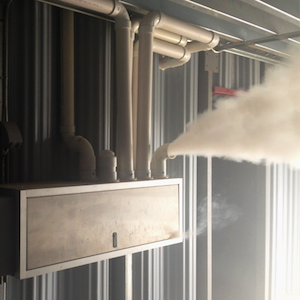
That allows scenarios to shift as they unfold. Crews have to respond to reduced visibility and changing conditions in real time, which adds a level of unpredictability that static setups can’t provide.
That carries through to:
- Class A burn props and cribs that elevate the fire and protect the floor
- Class B burn props that simulate propane or natural gas hazards
- Digital fire setups that create a visual flame effect in a controlled environment
- Temperature monitoring and alarm systems that track conditions throughout training
Egress & Vertical Movement
Egress systems change how a crew experiences the structure. Instead of moving through a familiar layout, firefighters have to work through access points that feel closer to what they’ll see on a call.
That change shows up in how they move and how they plan. Getting from one level to another takes more thought. Carrying equipment becomes a bigger part of the challenge.
Floor Doors
Floor doors are easy to overlook at first, but they change how crews approach vertical movement. Instead of relying on fixed routes, firefighters have to work through openings that require a different entry and exit strategy.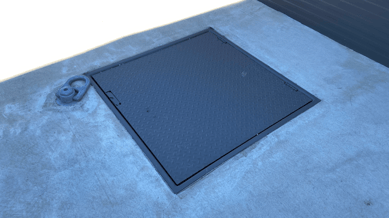
They also introduce scenarios that aren’t always considered during planning. Moving between levels, working below grade, or operating through tight access points all require a different pace and positioning.
The rest of the training system can build on this concept. Stair layouts can reflect different building types. Ladder access can introduce height and reach considerations. Doors and windows can give instructors more control over where movement begins and where it needs to end.
That shows up in areas like:
- Stair systems such as straight runs, L-shaped layouts, and intermediate landings
- Ladder types including straight, caged, ship, and gooseneck
- Doors and windows placed at different elevations for access and rescue work
- Roof hatches that support ladder access, confined space, and multilevel drills
Breaching & Shoring Props
Breaching props mean that openings are no longer a given. They have to be created.
That changes how a scenario develops. Crews have to decide where to force entry and how to move through what they create. Every step takes more time and coordination.
Window-based training is a good example. Practicing ventilate, enter, and search through a resettable opening allows instructors to run the same scenario more than once without rebuilding the setup. Crews can approach it differently each time, which changes how they handle entry and search.
That same idea carries through the rest of this category of props:
- Forcible entry doors built for different swing directions
- Garage door props that require cutting techniques
- Wall breach systems that reflect standard construction
- Floor and ceiling breach points used during overhaul and access work
Ventilation
Ventilation training focuses on how conditions move through a structure after an opening is made. Crews have to read changes as they happen and adjust their approach based on how the environment responds.
Sloped and flat roof systems introduce different working conditions. Surface type affects footing, positioning, and how cuts are made. Crews have to adjust their approach depending on what they’re working on.
You’ll see value in features like:
- Sloped roof systems with different pitches and working surfaces
- Flat roof setups with parapets or railings
- Wall-mounted exhaust fans that move air horizontally
- Roof-mounted exhaust fans that support vertical airflow
Roof design changes how crews position themselves during a cut. A flat surface allows for one approach, while a sloped surface forces adjustments in footing and balance. That difference affects how tools are handled and how quickly work can happen.
When air is pushed or pulled through the structure, smoke behaves differently from one area to the next. Crews have to account for those shifts as they move, which changes how they read conditions and respond during a drill.
Search and Rescue
Search and rescue training depends on how a space is laid out and how it can change. Crews are working without clear visibility, so the structure itself shapes how they move and communicate.
Fixed layouts can only go so far. Once crews learn the space, the challenge starts to drop.
Reconfigurable Maze Systems
Maze panel systems allow instructors to change the layout without rebuilding the structure. Walls and pathways can be moved throughout the building, which forces crews to approach each scenario differently.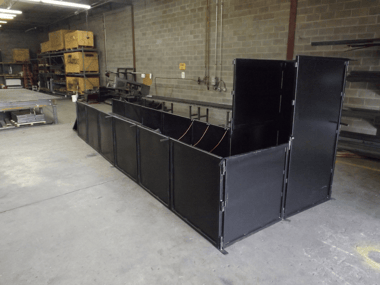
That change affects how teams search, communicate, and move together. Familiar routes disappear, and crews have to rely on coordination instead of memory.
That plays out in features like:
- Balconies, catwalks, and breezeways that reflect different building types
- Nance drill setups that simulate rescues from openings in the floor or roof
- Denver drill configurations that replicate window-based rescue scenarios
Changing the layout forces crews to slow down and work through the space with more intention. Movement becomes less predictable, and communication becomes more important as teams adjust to each new setup.
How These Firefighting Accessories Improve Training Over Time
Adding props changes what a burn building can support. Over time, those additions shape how crews train and how instructors build each evolution. Training doesn’t stay fixed. It shifts as different conditions and layouts are introduced.
|
Training Situation |
What Changes |
|
Repeated evolutions |
Crews adjust to conditions instead of relying on memory |
|
High-risk scenarios |
Skills are practiced in a controlled setting |
|
Movement through the structure |
Positioning depends on layout rather than habit |
|
Multi-company drills |
Communication becomes more deliberate across teams |
Firefighting Training Props That Expand Your Burn Building
A burn building sets the foundation, and the additions you choose shape how that space brings value to your training program. Each one influences how crews move and respond in changing conditions.
Over time, instructors can adjust scenarios without relying on repetition. Crews stay engaged, and each evolution calls for a fresh approach.
Focus on selecting additions that match how your department trains today and how it expects to train in the future.
Featured photo courtesy of Lexington Fire Department.
View All Firefighting Training Accessories
See the full range of accessories available and how you can better prepare your team across different training scenarios.